
How Road Trips Can Be the Best Grounding Method
In 2014, I was living in Sri Lanka. I was very fortunate to work with great people and experience the culture firsthand. The food was fantastic, the public was friendly, and the beaches were in abundance. These were just a few of the many benefits of living on a tropical island. What was even better? I got to drive there.
Before I had a local driver’s license, I had already taken a long train ride from Colombo to the breathtaking highlands of Nuwara Eliya. That journey alone opened my eyes to the beauty of the island, but I couldn’t wait to experience more. I needed something deeper, something immersive. So I started planning the longest road trip I could manage in the country.
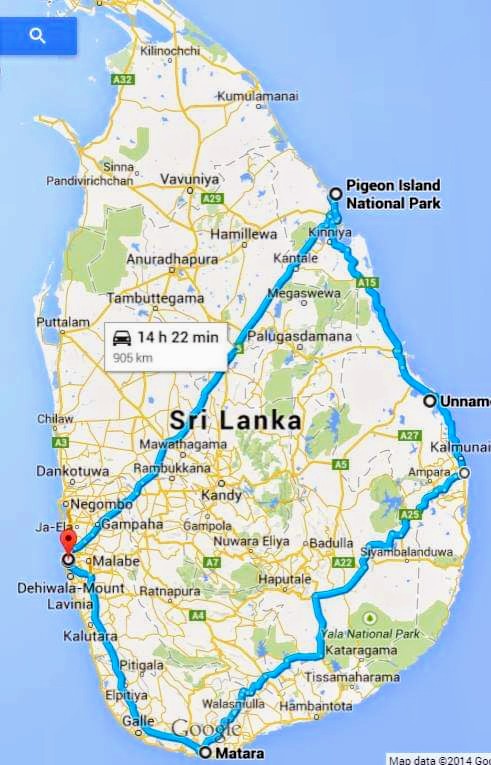
With Sri Lanka being relatively small and navigable, I realized it had a unique offering: the opportunity to visit most of the island’s major coastal cities in one extended road trip. Of course, with breaks here and there. Using Google Maps, I started connecting the dots and crafting a loop that would begin and end in Colombo. My spouse and daughter were joining me, along with a good friend and his wife. The challenge? Keep everyone engaged, safe, and entertained. I was at peace, just having the road ahead of me.
We rented a compact Nissan Micra, packed our things, and hit the road. I didn’t fully realize it at the time, but this wasn’t just a sightseeing adventure. It was something much deeper. A means of grounding. A chance to reconnect with the land, with the present moment, and with myself.
Looking back now, that journey did something to me. And it continues to inform how I manage my anxiety to this day. Road trips, especially long ones, can be among the most powerful grounding tools. Here’s why.
1. Driving Forces You to Unplug
When you’re driving, especially through remote areas, there’s no room for distraction. The endless scroll of your phone, the ping of notifications—they all fall away. You’re focused on the road, the sounds of the engine, the map in your mind, and the occasional playlist humming in the background. This act of single-tasking is grounded in itself.
According to a study by the American Psychological Association, chronic digital distraction can increase stress and diminish our capacity to focus. Road trips, by contrast, naturally pull us out of the digital vortex and into the physical world.
2. Nature Humbles You
As we left Colombo behind and drove past jungles, rice fields, coastal cliffs, and rural towns, something shifted in me. The further we got from the city, the smaller my problems seemed. There’s something profoundly humbling about being surrounded by nature. It reminds you that your current stressor—an email, a bill, a worry—is temporary, perhaps even trivial.
This phenomenon is backed by science. Studies show that spending time in nature significantly reduces cortisol levels (the stress hormone) and improves emotional well-being. Driving through natural landscapes allows this grounding effect to settle into your nervous system slowly and steadily.
3. Changing Scenery Reboots Your Brain
One of the best things about a long road trip is the ever-changing view. From the golden beaches of Unawatuna to the misty hills near Ella, each stretch of road offers a new perspective. This change of scenery keeps your mind engaged in the present.
Research suggests that exposure to new environments activates the brain’s reward system and enhances neuroplasticity—your brain’s ability to adapt and rewire itself [^3]. In simpler terms, novelty helps you reset. If you’ve been feeling stuck or anxious, changing your surroundings is one of the quickest ways to shift your mental state.
4. It Gives You Space for Introspection
There’s a kind of magic that happens when the road stretches out in front of you, the conversation quiets down, and your mind begins to wander. Not in a scattered way, but in a focused, reflective one. Long drives offer a rare chance for uninterrupted thinking, not about to-do lists, but about your life, your values, your dreams.
Psychologists refer to this as “constructive internal reflection,” which plays a critical role in emotional regulation and problem-solving. When paired with a calming environment and fewer interruptions, your mind naturally starts to organize itself.
5. It Pushes You Out of Your Comfort Zone
Driving in a foreign country, where road signs are in another language and traffic norms are unfamiliar, is not exactly a comfort zone activity. But growth never happens in a comfort zone.
During our trip, I had to make quick decisions, navigate unfamiliar routes, and stay calm under pressure, especially when driving through the winding roads of the hill country. These moments of discomfort turned into small triumphs. Every challenge met was a reminder: I can handle more than I think.
Exposure therapy, a psychological method used to treat anxiety, often involves gradually facing what you fear or avoid. Road trips offer a real-world, lower-stakes version of this. You confront discomfort, and in doing so, you grow more grounded and confident.
Final Thoughts
That road trip across Sri Lanka did more than just show me the country’s beauty. It gave me something internal—a sense of stillness and belonging. It reminded me that grounding isn’t just about standing barefoot in the grass (though that helps, too). It’s about coming back to the moment, finding your breath, and feeling the rhythm of life around you.
Whether you’re cruising along the coast, winding through mountains, or driving through a desert highway, road trips offer something increasingly rare in our fast-paced world: presence. And in the presence, we heal.
So next time anxiety has you in its grip, consider this: maybe what you need isn’t more scrolling, more analyzing, or more caffeine. Maybe you just need the open road.